
ESG · Enersys

ESG data that comes from daily work

Enersys sets up systems so ESG data is recorded during normal work instead of being chased at year end. We use Odoo to capture environmental, supply chain and workforce data, PrivacyHub to run monthly data cycles and protect personal data under PDPA, and dashboards that trace every indicator back to its evidence.

Last updated

Who this is for

  • Preparing a sustainability report or 56-1 One Report

    Listed companies that disclose sustainability data every year and want each figure to trace back to its evidence.

  • Getting ready for SET ESG Ratings

    Organisations that must answer the assessment with data that has an owner, a calculation method and an approver.

  • Suppliers asked for ESG data

    Businesses in a supply chain that customers now ask for energy, greenhouse gas or workforce data.

What Enersys does for ESG

The Odoo ESG app and our custom ESG module

Odoo 19 has an ESG app that calculates the carbon footprint by Scope 1, 2 and 3 from accounting entries and employee commuting data, shows gender parity and pay gap, and tracks reduction initiatives. For listed companies we also offer a custom ESG module on Odoo, scoped to each company’s indicators, source systems, approvals and report format.

Read: ESG with Odoo data
Monthly ESG cycles built on PrivacyHub

We reuse PrivacyHub’s governance base, role-based access, workflow status, evidence and audit history, to run ESG data collection every month. ESG-specific functions are built on top for each project, and employee data stays within PDPA rules.

Read: ESG as a monthly process

Indicator dashboards

Dashboards built by our data analytics team map each indicator to the 56-1 One Report, SET ESG Ratings or GRI, and link back to the source documents.

AI drafting with human review

Genesis AI helps draft and summarise the report, and a person reviews every step before anything is published, because figures disclosed to investors are the company’s responsibility.

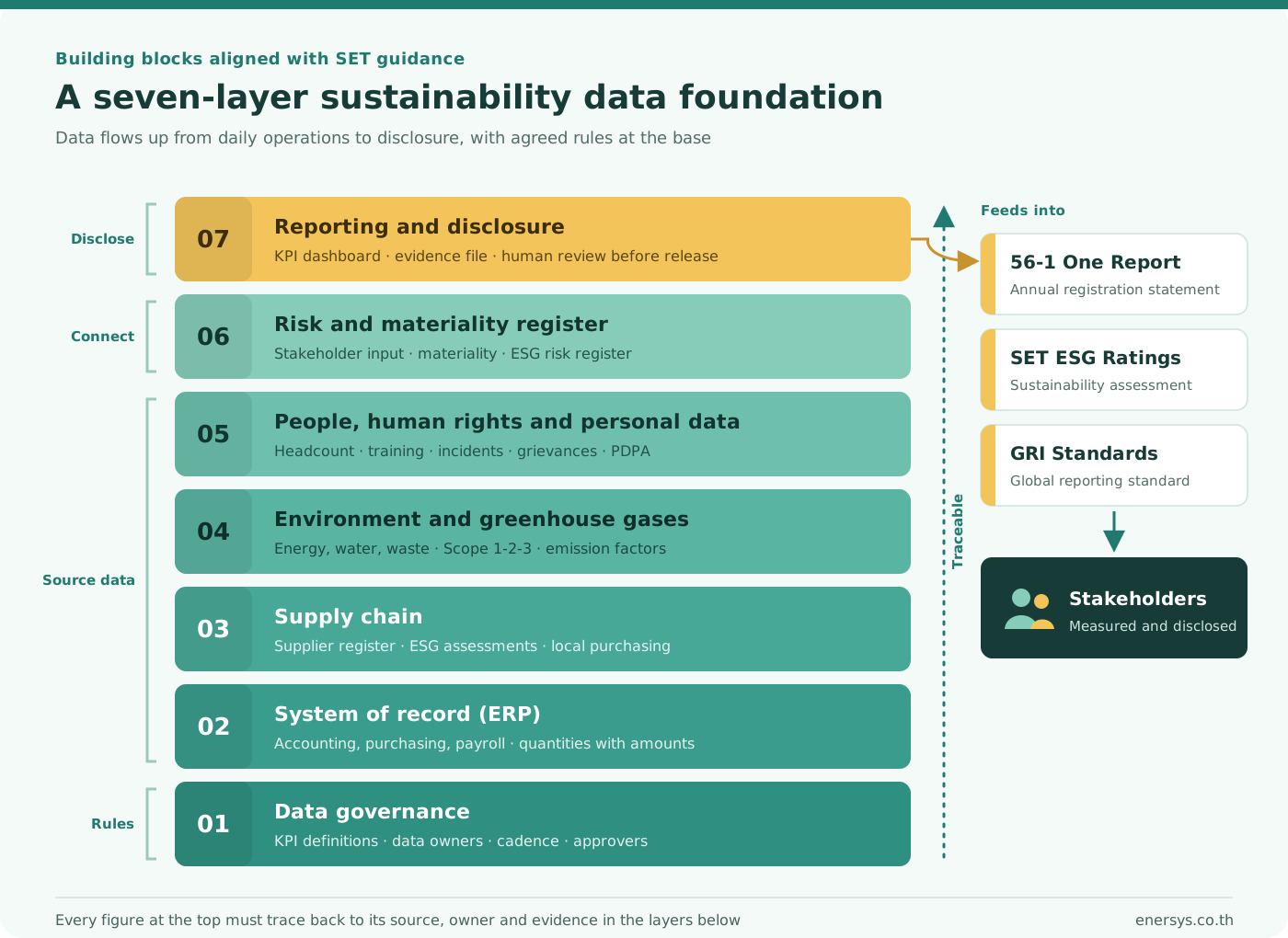
Seven layers of ESG data

This is the framework we work with, not a requirement of the Stock Exchange of Thailand. You do not need every layer in the first year, but it helps to see the whole picture before you start.

  1. 1

    Data governance

    Definitions, owners, collection cycles and approvers for every indicator

  2. 2

    System of record

    Energy, fuel, purchases and payroll recorded in the ERP during normal work

  3. 3

    Supply chain

    Supplier register, code of conduct acknowledgements and ESG assessments

  4. 4

    Environment and GHG

    Activity data converted with emission factors, Scope 1 and 2 first

  5. 5

    People and personal data

    Workforce indicators reported in aggregate under PDPA

  6. 6

    Risks and materiality

    Why each issue matters, linked to the indicators that track it

  7. 7

    Reporting and disclosure

    Dashboards mapped to 56-1 One Report, SET ESG Ratings and GRI

Read the full guide
Seven layers of sustainability data, from data governance at the bottom to reporting at the top

Start with a 12-week pilot

An example for a small scope: around 8 to 12 indicators, 2 sites and 2 main source systems. The real timeline depends on data quality and how quickly decisions are made.

  1. Weeks 1 to 2

    Choose indicators and agree scope, units, calculation, data owners, reviewers and approvers

  2. Weeks 3 to 5

    Set up the indicator register, periods, access rights, forms, evidence and data quality rules

  3. Weeks 6 to 8

    Connect the first data sets, test imports and have owners check real entries

  4. Weeks 9 to 10

    Rehearse one period close, log exceptions and adjust each team’s duties

  5. Weeks 11 to 12

    Close the pilot period and let a reviewer trace values back to evidence

Frequently asked questions

How is ESG different from sustainability?

Sustainability is the goal: what a business does to the world. ESG is the set of criteria used to measure and report the same thing so investors and regulators can check it.

Do we need to use Odoo already?

No. If your data sits in another ERP or HR system, we connect it and keep references instead of copying every field. If you already run Odoo, its ESG app is a quick starting point.

Does the Odoo ESG app cover Thai reporting requirements?

Not automatically. The app covers carbon footprint, gender parity and pay gap, and initiatives, but many governance topics still depend on policies, roles, decisions and evidence from other systems. We scope those against your indicators and report format.

How does PDPA affect ESG data?

Many social indicators start from personal data in HR. Report them in aggregate, limit who can see individual records, keep only what you need, and record the legal basis for processing.

How long does it take to start?

Our example pilot runs 12 weeks for a small scope, around 8 to 12 indicators, 2 sites and 2 main source systems. The real timeline depends on data quality and how quickly decisions are made.

Read more about ESG

Start with one indicator you report today

Bring one data point, such as monthly electricity across sites or the workforce figures you disclose. We trace it from source to report with you, to see where the data lives, who signs it off and what is missing.

Talk to us about ESG