The SET ESG Data Platform is the system the Stock Exchange of Thailand opened on 3 October 2022 for listed companies to submit quantitative ESG data through SETLink, covering energy, resources, greenhouse gases, employees and the board. It matters more in 2026 because companies volunteering for FTSE Russell ESG Scores must reach 85% completion, approved by the ESG-approver, by 30 April 2026.
This guide is for sustainability teams, company secretaries, investor relations and CFOs who look after this data. On 12 October 2026 we read SET's launch press release, the Thai-language Guideline to FTSE Russell ESG Scores and SET's FAQ document, and summarised only what those documents say. Where the documents do not describe a screen or a field, we leave it out.
SET's own documents call the system the ESG Data Platform. Most people search for SET ESG Data Platform. Both names refer to the same system.
What is the SET ESG Data Platform?
The SET ESG Data Platform is the central system SET uses to collect, process and publish ESG data from listed companies. SET's press release of 4 October 2022 called it the first sustainability data management system in the Thai capital market.
The launch release made three points.
- The data is structured, with a focus on numbers that can be compared across industries and alongside financial data.
- The platform connects to the 56-1 One Report submission system and supports disclosure in the SEC's format.
- Phase two publishes the data on the SET website, settrade and SETSMART from the second quarter of 2023.
The same release said SET planned to reuse the data in other assessments, such as THSI and CGR, so companies would not have to submit the same figures twice.
What data does the platform ask for?
The official documents we could check name four first-phase groups: energy and resource use, greenhouse gas emissions, employee data and board of directors data.
| Data group named by SET | Teams that usually hold the source data |
|---|---|
| Energy and resources | Engineering, facilities or plant teams |
| Greenhouse gases | Sustainability team, working with whoever holds energy and fuel data |
| Employees | Human resources |
| Board of directors | Company secretary |
The release introduces this list with "such as", so the platform can hold other topics too. We did not find a public document that lists every indicator in the system. The safe route is the user manual inside the platform itself, which SET's FTSE guideline points companies to, and building your topic list from the screens you actually see.
The 2026 rules: 85%, approval, and a PDF in two languages
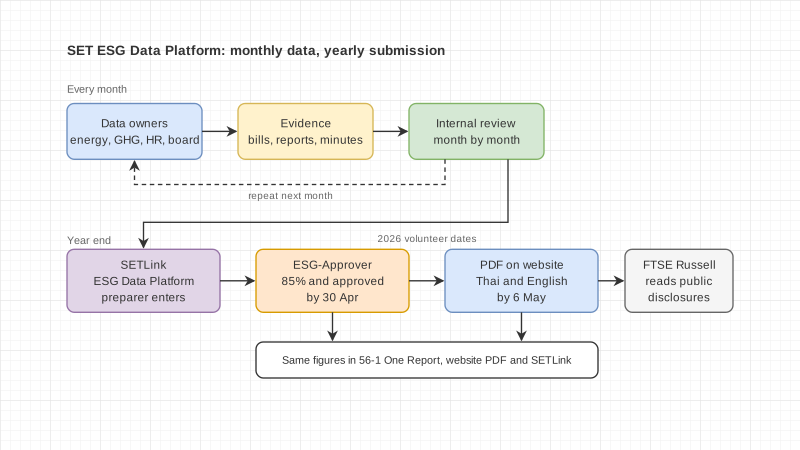
For companies volunteering for FTSE Russell ESG Scores in 2026, SET's guideline requires data on the ESG Data Platform to be at least 85% complete and approved by the ESG-approver by 30 April 2026. The company must then publish a PDF of that data on its website in both Thai and English by 6 May 2026.
| Date (2026) | Step | Who |
|---|---|---|
| 31 March | Invitation email sent | SET |
| 30 April | SET checks status: at least 85% complete and approved by the ESG-approver | Company |
| 6 May | Download all platform data as a PDF and publish it on the company website in Thai and English | Company |
| 6 May | Submit the application through the form in the invitation email, with the PDF link as evidence | Company |
| 5 June | Confirmation of whether the company will be assessed | SET |
The guideline states the reason for the PDF plainly: so FTSE Russell can access the company's data. If more than 50 qualifying companies apply, SET picks the 50 that filled in the most on the platform. The assessment is free.
The guideline's appendix outlines the steps in the system. The preparer logs in to SETLink, opens the ESG Data Platform menu, fills in and confirms each topic, then uses the check button to see the completion percentage, which must reach 85% before the data goes to the ESG-Approver. The ESG-Approver then approves. The guideline also warns that the donut chart on screen only tracks how many topics have been confirmed. It is not the completion percentage used for the application, so do not read one as the other.
The 85% rule applies to volunteers only. Companies SET sends for assessment automatically do not apply and cannot opt out. These are companies on the SET ESG Ratings list in any year from 2023 to 2025 that were not removed, and companies in the SET100 at any review from December 2022 to December 2025.
How does it relate to FTSE Russell ESG Scores and the 56-1 One Report?
All three draw on the same data but play different roles. The Data Platform is how you submit data to SET, the 56-1 One Report is the annual report in the SEC's format, and FTSE Russell scores what the company has disclosed publicly.
| Item | Role | What the official documents say |
|---|---|---|
| ESG Data Platform | Channel for submitting quantitative ESG data to SET | Submitted through SETLink and connected to the 56-1 One Report submission system |
| 56-1 One Report | Annual report in the SEC's format | The launch release says the platform supports disclosure in this format |
| FTSE Russell ESG Scores | ESG score from 0 to 5.0 that replaces SET ESG Ratings from 2026 | Based on the annual report, sustainability report, integrated report or company website. No questionnaire |
In practice the same figure shows up in three places: SET's system, the annual report and the website. If the three do not match, readers will ask why. SET's FAQ says the company is responsible for the accuracy of what it discloses, and that if FTSE Russell has doubts about the data, the score may be affected.
According to the FAQ, scores announced in December 2026 reflect performance as at the end of 2025 for companies with a December year end. Anything you want FTSE Russell to consider should be online before the assessment starts in June, and the preliminary review window around September and October gives about four weeks to add information. For data preparation aimed at FTSE Russell itself, see our guide to preparing data now that SET ESG Ratings has become FTSE Russell ESG Scores.