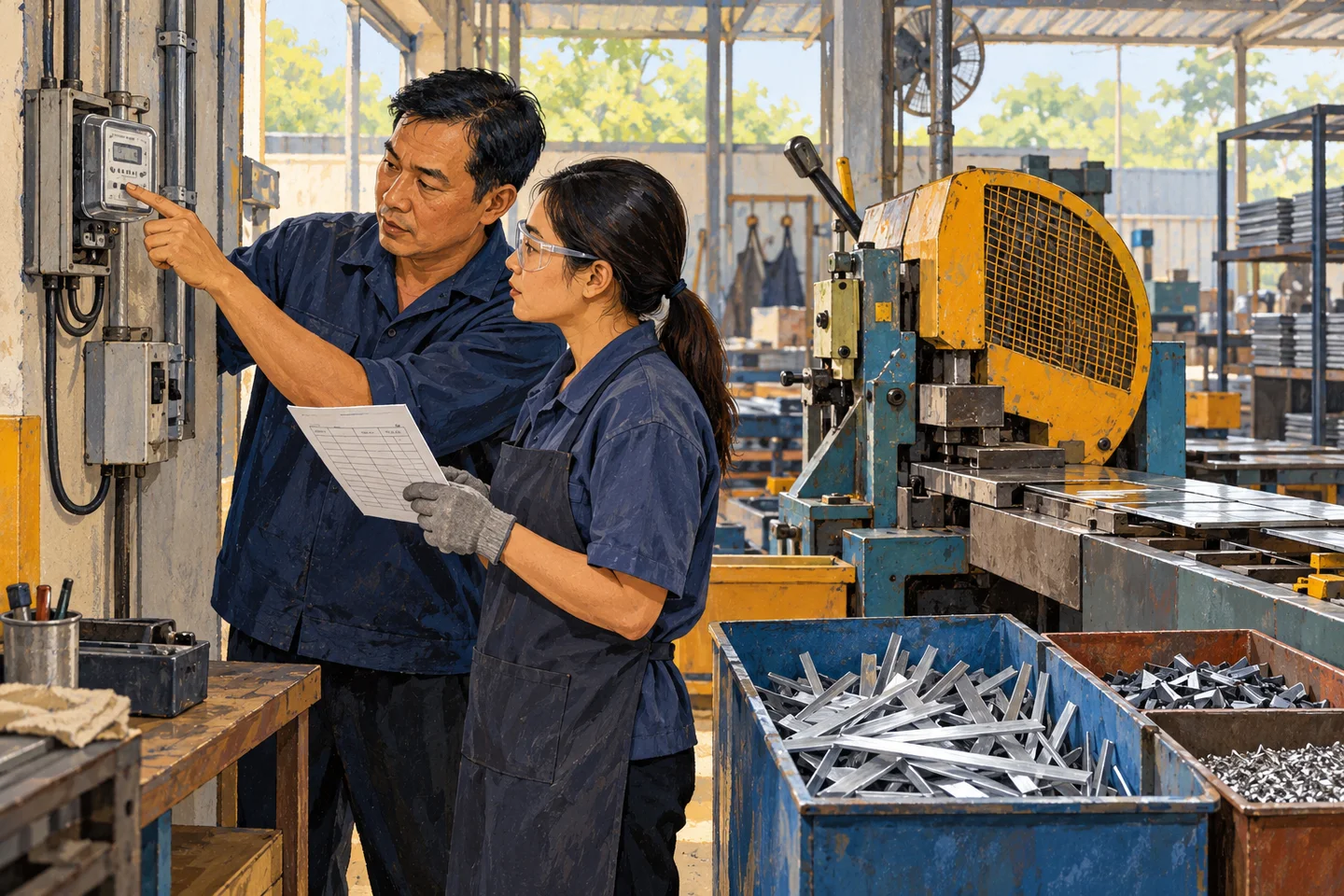
A factory cuts its electricity bill, but it also makes fewer products. Has it made progress on the SDGs?
That depends on what it measures. The bill alone might look encouraging even if production still uses the same energy per item. Energy per item can also improve while growing output pushes total consumption higher. This small operating question explains why putting SDG symbols in a report is not enough to guide a business decision.
This guide starts with work that owners and managers can influence, then connects it to SDG targets. One hypothetical factory runs through the examples. Its numbers and decisions illustrate a method; they are not Enersys customer results.
Understand the framework before selecting a goal
The Sustainable Development Goals are part of the 2030 Agenda adopted by United Nations members in 2015. Implementation began in 2016, with a horizon of 2030. The framework contains 17 goals and 169 targets. The primary text is the United Nations 2030 Agenda.
A goal sets a broad direction, such as sustainable consumption and production. A target describes a more specific change. Indicators track progress. These levels serve different purposes.
SDG Move's introduction is a useful starting point for Thai readers, especially its emphasis on reading the targets. Reading a target helps a team test whether its proposed work addresses the problem or merely uses similar language.
The agenda also considers people, planet, prosperity, peace and partnership together, often called the five Ps. That perspective reminds a factory that a waste project can affect workers and suppliers as well as its own costs. It does not mean every business must select a project in each area to make its report look balanced.
Follow the product and ask who experiences the impact
Imagine a small metal-parts manufacturer that buys material, cuts and forms it, then ships finished components. If a meeting starts with “Which SDG should we support?”, the team may think of an easy activity before it identifies a serious problem.
Follow the work instead. Where does the material come from? How much scrap does cutting generate? When do machines consume electricity? What risks do operators and contractors face? Continue through transport, customer use and disposal. The company's control and responsibility may differ at each stage, but the team should see the chain before drawing its project boundary.
Listen to the people affected. A production manager may see scrap as a cost. An operator may know that a guard interferes with the task. A contractor on the night shift may not receive the same instructions as permanent staff. Those perspectives make the problem more precise than office totals can.
Give weight to the severity of an impact and the people affected, then consider the company's ability to change it, the resources required and a workable starting point. Easy measurement should not push a dangerous working condition out of the plan.
Read the target that matches the intended change
The hypothetical factory might examine the following connections. This is a proposed way to plan company work, rather than a UN certification procedure or a list of obligations.
| Operating problem |
Target to read |
Question before starting |
| Idle machinery and high electricity use |
7.3, energy efficiency |
Can idle consumption fall without increasing scrap or risk? |
| Scrap from metal cutting |
12.5, waste prevention, reduction, recycling and reuse |
How much scrap can better cutting layouts prevent before recycling is considered? |
| Machine hazards and contractor access |
8.8, labour rights and safe working environments |
Do the measures cover everyone working in the area? |
Check the wording in the goals and targets of the 2030 Agenda. Target 8.8 explicitly includes migrant workers and people in precarious employment. Counting only permanent employees may leave the people at greater risk outside the picture.
Start with few enough priorities to act on and review. Record which impacts remain unaddressed and why. Selecting a goal does not remove other impacts: a factory using less electricity still needs to consider wastewater or employment conditions where those are relevant to its operations.
Define a question the numbers can answer
Return to the factory's electricity project. Before changing machine schedules, the manager needs to decide what will be compared. Choose a reliable reference period, identify the machines or production line included, and use a comparable unit of output. If product models require very different amounts of energy, a combined item count may be misleading.
Consider a purely hypothetical calculation. In the reference month, one line uses 10,000 kWh and produces 5,000 accepted items: 2 kWh per item. The following month it uses 9,000 kWh and produces 4,000 accepted items: 2.25 kWh per item. Total electricity falls 10%, while electricity per item rises 12.5%. These figures do not explain the cause. The team still needs to examine product mix, operating hours and rejects.
For this project, a usable record would include:
- The production boundary and measurement period, including how electricity is allocated if a meter serves other areas.
- Total kWh, accepted output and kWh per accepted item, alongside the mix of products made.
- Meter readings or bills, production records and unusual events such as maintenance shutdowns or shift changes.
- The person collecting the data, its reviewer, and the date when the manager will use it to decide on scheduling or repairs.
If consumption cannot yet be allocated accurately, label the figure as an estimate and explain the method. Extra decimal places do not fix an unclear boundary.
The factory's kWh per item is an internal operating measure. Target 7.3 concerns improvement in energy efficiency at the global level. A production-line result cannot stand in for a UN indicator or establish that the factory has achieved Goal 7. The UN Statistics Division's global indicator framework helps distinguish the two levels.
Check who bears the cost of an improvement
Changing production hours might lower electricity costs while adding night work that leaves people too little rest. Energy and safety outcomes could move in opposite directions. A material substitution might reduce factory scrap but cause more failures during customer use, moving waste further along the chain.
Before approving a trial, specify what must not deteriorate, including product quality, working conditions and burdens passed to contractors. Assign authority to stop the trial when a risk emerges. Reviews should give people doing the work room to explain what the figures miss.
Safety records have limits too. Fewer reported accidents could reflect safer work or reluctance to report. Examine machine conditions, hazard correction and reporting channels alongside the count. Do not use an accident target to pressure people into concealing incidents.
Match the claim to the evidence
Saying a project “aligns with target 12.5” explains relevance. It does not show that waste fell. A claim of contribution should identify what changed, within which boundary and period, and what evidence supports it.
If the factory has only approved new cutting layouts, an accurate statement would describe a plan to reduce scrap on the specified line and compare scrap relative to material input with a reference period. Report actual results once measured. Separate waste prevented from waste sent for recycling. Selling more scrap by itself does not establish that less waste was generated.
When performance improves, explain other changes that might matter, such as output or product mix. Before-and-after data tracks change but does not establish every causal link. Do not attribute the entire improvement to the project if other factors have not been separated.
The SDGs are a framework of goals. Mapping a project to them is not a UN certificate, and company wording should not imply that such certification has been received.
Where ESG fits
For the practical purpose of this guide, the SDGs help a business ask which impacts it is addressing and how they relate to development goals. ESG work may use some of the same data for assessment or disclosure under a chosen or required framework. Adding an SDG number does not fulfil that framework's requirements. For the data question, see building a foundation for sustainability reporting.
UNDP's discussion of business and the SDGs considers how business creativity and innovation can address development challenges. For a small company, a useful starting point may be an operating decision it can change, while keeping the effects on others in view throughout the product's journey.
At the next operating meeting, choose one unresolved problem and read the relevant target together. Ask who experiences the impact, what the team will change, how it will judge improvement, and which limits it must acknowledge. An unanswered question identifies work to do before the company publishes its SDG claim.
AI-generated conceptual illustration of a hypothetical factory. It does not depict a customer facility or project.
Sources and scope
- SDG Move, Introduction to the SDGs, a Thai introduction to the meaning and structure of the SDGs.
- United Nations, Transforming our world: the 2030 Agenda for Sustainable Development, checked for the 17 goals, 169 targets and target wording.
- UN Statistics Division, Global indicator framework, for global indicators, which are revised through periodic updates.
- UNDP, Business and the SDGs, for the role of business.
Sources checked on 18 October 2026. The project-selection method and factory examples are practical proposals in this article, not certification guidance or legal requirements for every company.