If the system shows no finished goods while several batches are still moving through production, should sales accept another order? The answer depends on knowing which stage each item has reached and what work remains.
An Odoo customer story published on October 6, 2026 describes UV Engineering, a manufacturer of religious idols, tracking production across 7 to 8 stages. The team once declined an order because it believed the products were unavailable, then discovered around 300 units the following week. Read Odoo’s case study
These figures and events belong to the specific case published by Odoo. They are not Enersys data, an independent audit, a benchmark or a promised result for other factories.
“In stock” needs to say where the item is
A single inventory total cannot tell a team whether an item is ready to ship. Raw material waiting to be issued, work in progress waiting for the next operation, and finished goods that have passed inspection have different statuses and different availability.
Odoo says the challenge in this case came from tracking products across several stages. When the team could not see how many units were at each stage, it was difficult to know whether an order could be fulfilled. It could also mean starting production again even when some work had already been done.
The customer used an example: if an order for 500 units arrived and 200 were already at one stage, the team could continue from there instead of restarting all of it. The 500/200 figures illustrate the idea in Odoo’s article; they are not presented as a confirmed customer order.
Map the process before looking at the total
Start with one product and map its route from incoming material to a shippable item. Name each stage as it works on the shop floor. Agree on what counts as completion at each stage, who confirms the quantity, and how scrap, rework or items awaiting inspection are recorded.
Keep these groups distinct:
- Raw materials that have not yet been issued to production
- Work in progress at each stage, including paused or rework items
- Finished goods that are complete and ready for sales to confirm a delivery date
Teams can then use status-level quantities to help assess whether to accept more work, where to resume production and what delivery date to communicate. Those quantities support the decision; capacity plans, quality checks, remaining materials and bottlenecks still matter.
A system can show status when recording matches the work
Odoo reports that after implementation, UV Engineering could see quantities at each production stage and continue from the appropriate point. The article also says the business manages accounting, e-commerce and manufacturing on the same platform. Read the full customer story
That visibility does not come from enabling a module alone. Factories differ in their production routes, quality gates, units of measure and rework rules. Odoo’s configuration needs to match the actual process, and staff need to record stage changes and material use on time. If records are incomplete, the system will show an incomplete picture.
Before changing the system, choose one product and ask production and sales together: “If a customer orders today, can we tell how many units are ready and what steps the rest still need?” If the answer depends on phone calls or several spreadsheets, start by mapping the stages and assigning ownership for the records.
Sources: From Operational Chaos to Complete Clarity: How UV Engineering Mastered Inventory and Production Flow, Odoo, October 6, 2026, Odoo Customer Reviews
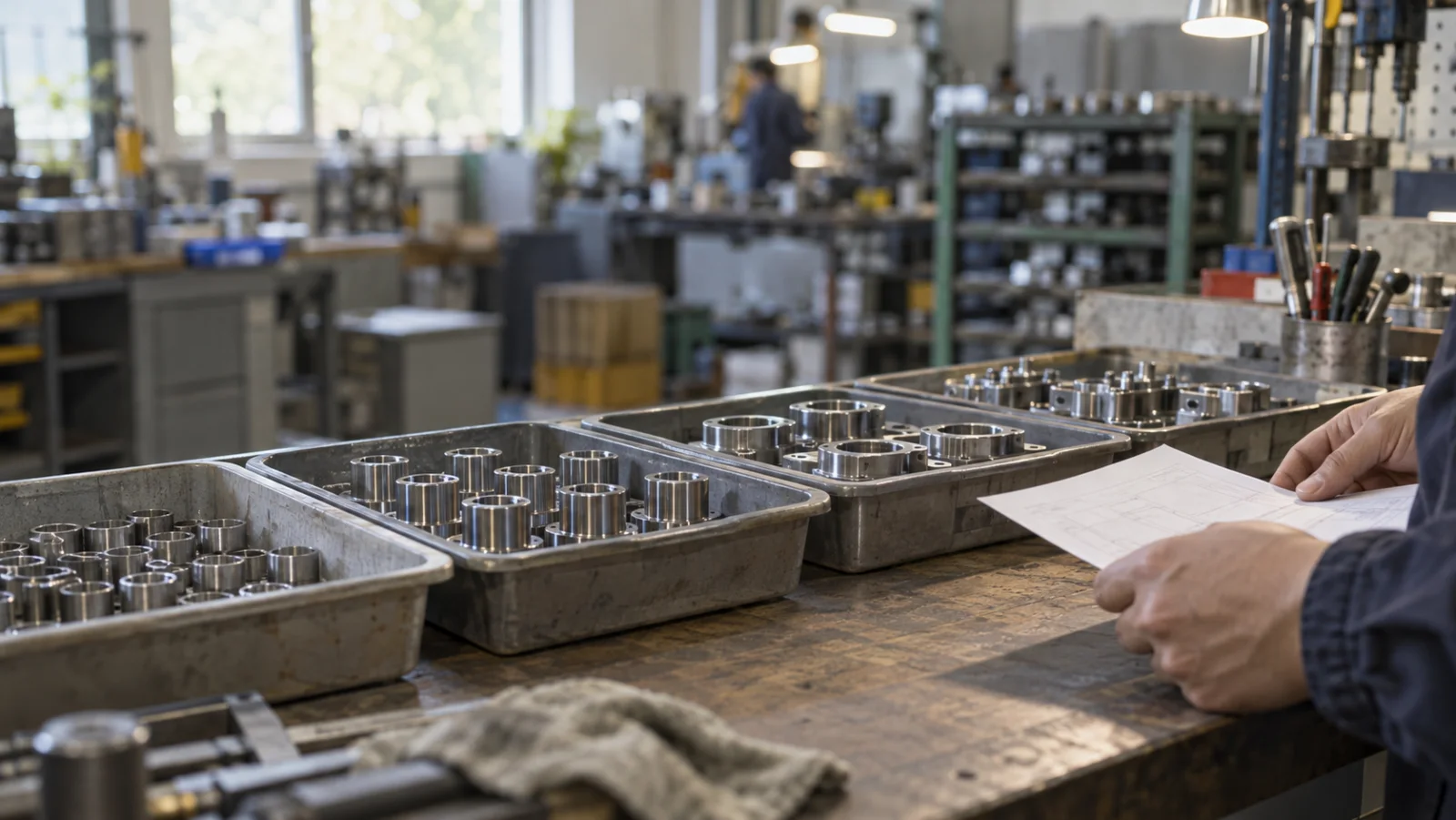
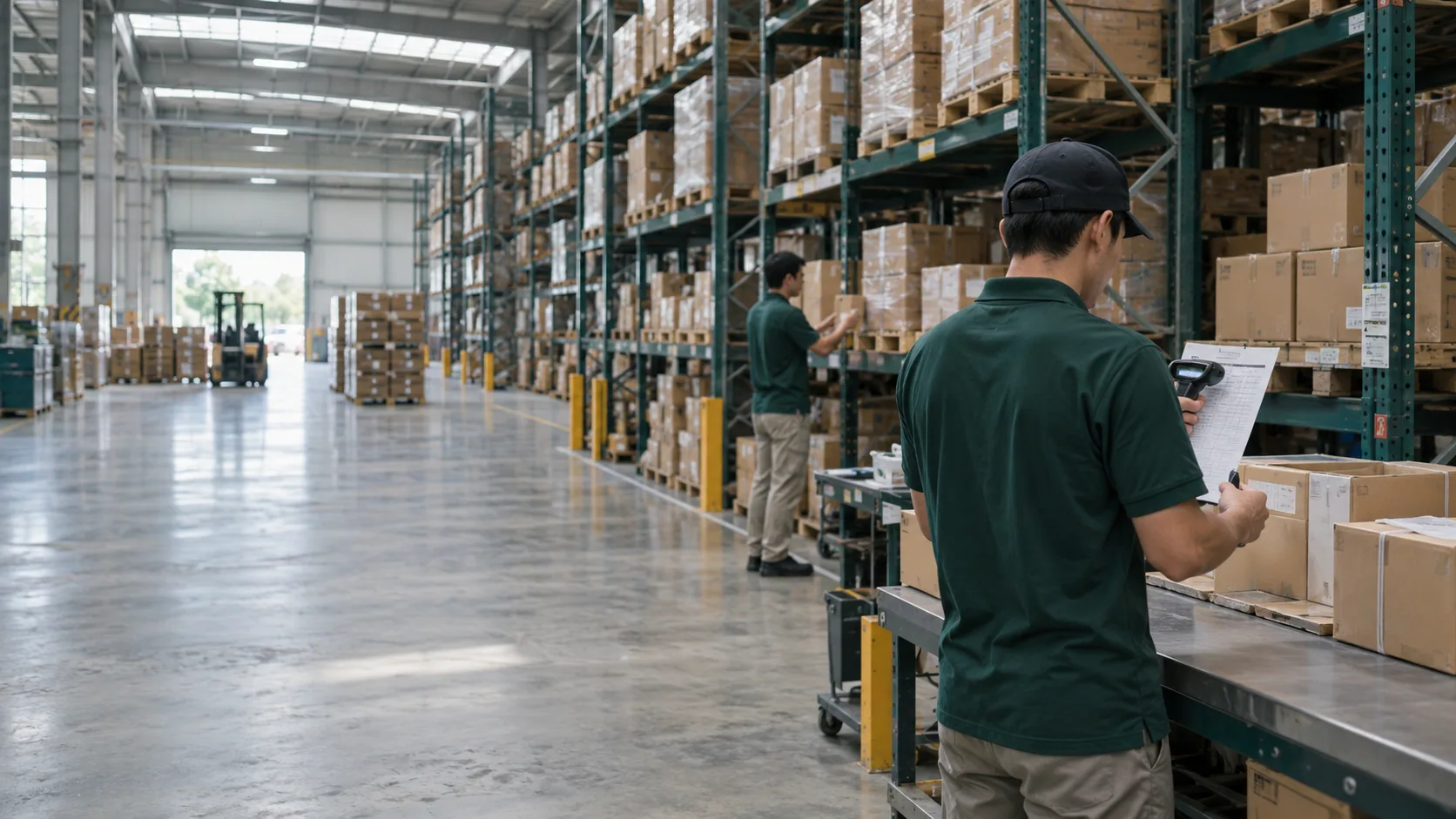
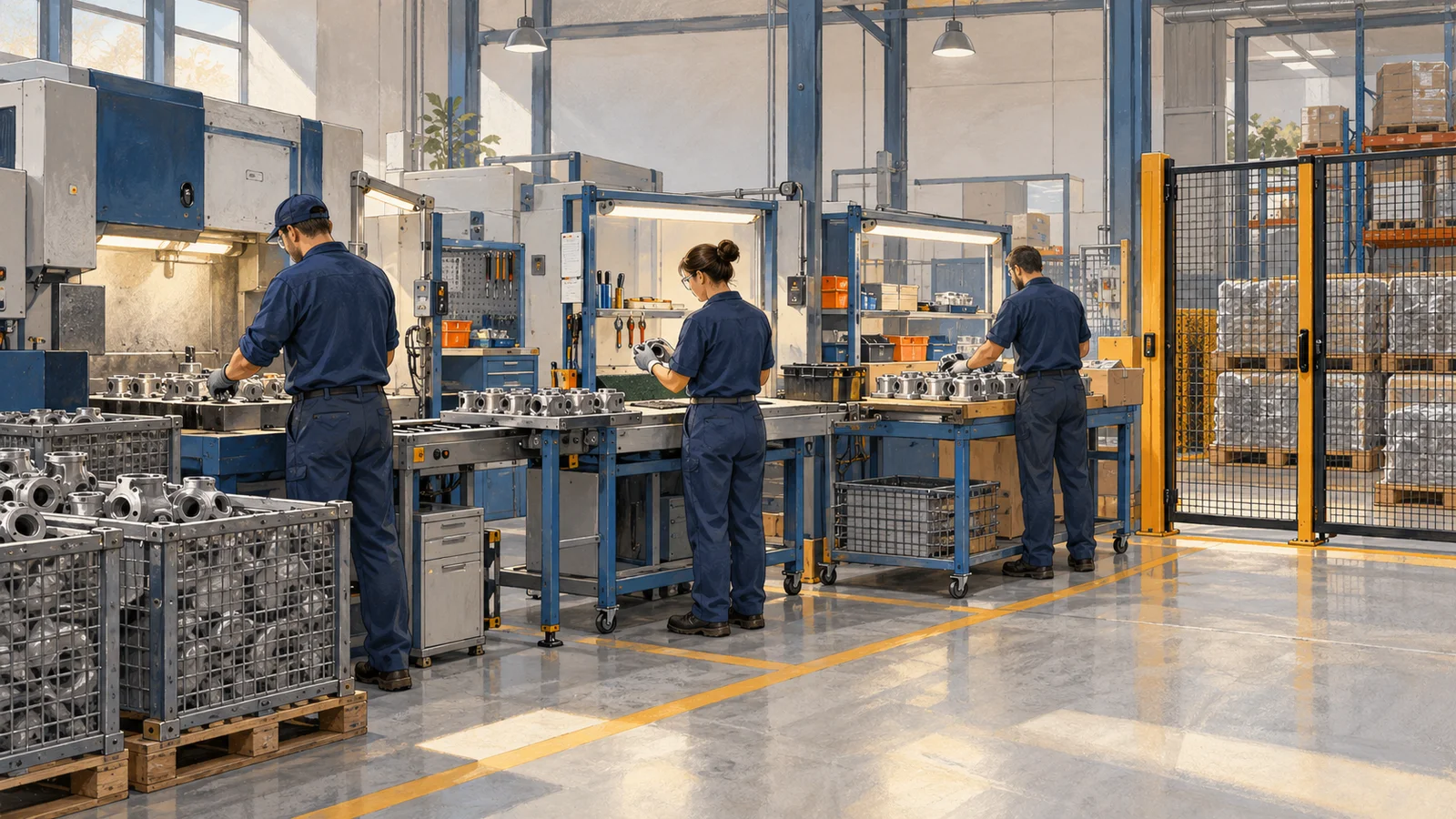
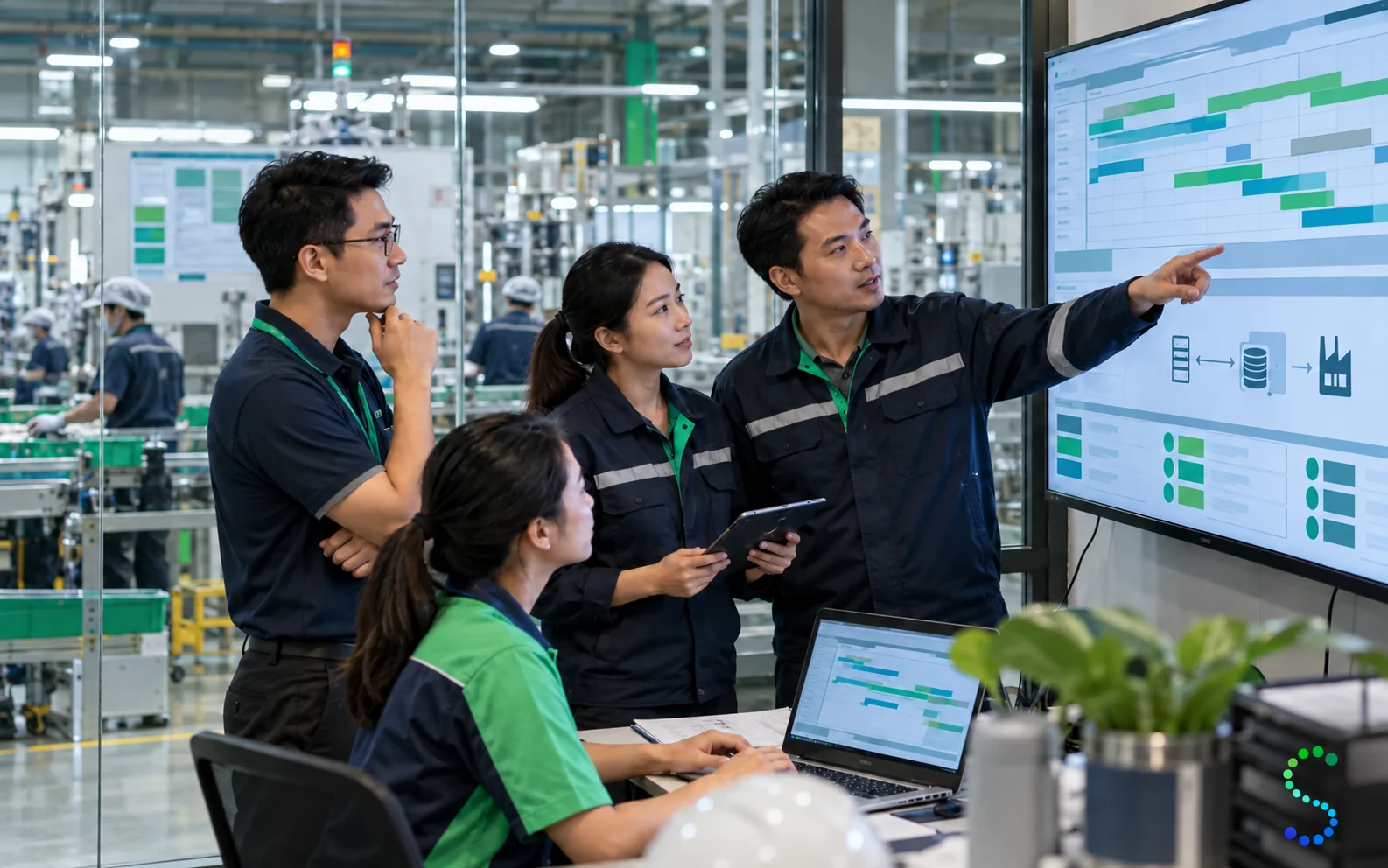
AI-generated illustration of a fictional factory and workpieces at several production stages. It does not show UV Engineering’s or Enersys’s actual premises, personnel or products.
Discuss manufacturing and inventory systems with Enersys