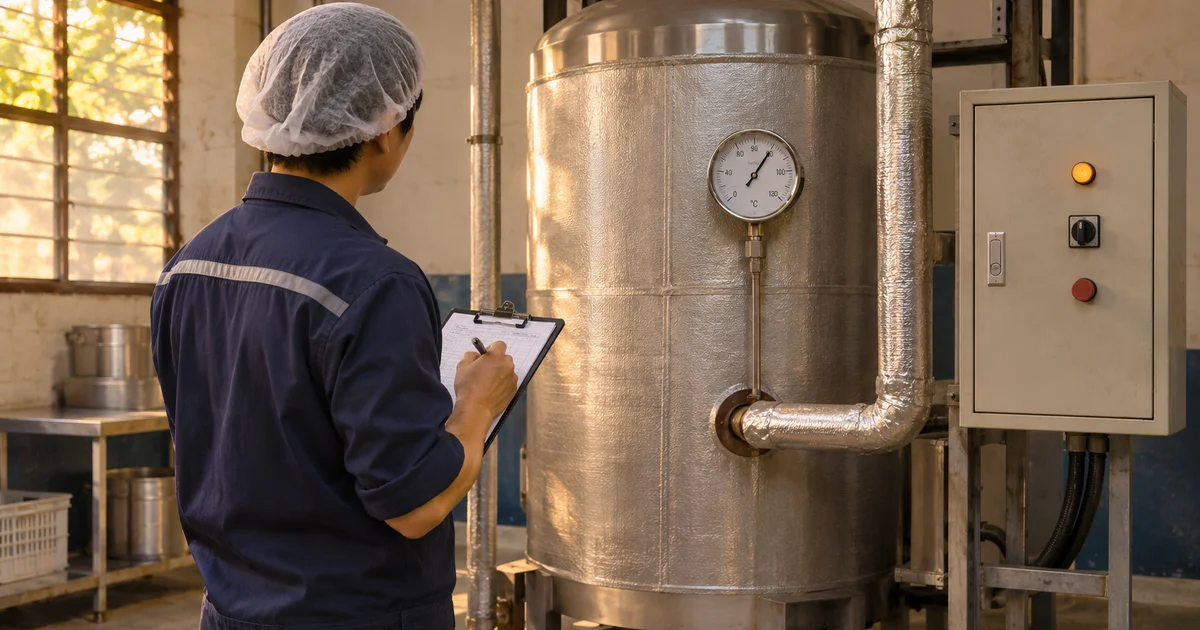
Imagine a food factory that uses a gas boiler to heat water for washing production equipment before the morning shift. If the hot water is late, so is the handover to the next shift. Before asking for approval to buy a heat pump, time one actual wash cycle and find out how much water the crew needs, how hot it has to be at the point of use, and when it has to be ready.
UN Climate Change published its COP31 recap on November 23, 2026, after the conference closed in Antalya, Türkiye, on November 22. The Electrification Delivery Package, presented on November 19 under the Global Climate Action Agenda, included measures to electrify industry. UN Climate Change reported separately in its recap that parties did not agree on the presidency-led cover decision. For Thai factories, the news is a reason to look at individual jobs that use heat. COP31 recap · Electrification Delivery Package
Record how the current wash cycle runs
Have the production, quality, and maintenance teams observe the same wash cycle. Record the water volume, inlet and point-of-use temperatures, when water heating starts, when the hot water is ready, and when quality staff release the equipment for production. Track how much fuel and electricity the hot-water system uses over the same period. If the boiler serves several processes, have maintenance meter the wash cycle separately or document how its share was estimated. A monthly gas bill gives you the total cost, but it cannot tell you what this cycle costs. US Department of Energy guidance on energy baselines
Agree on the pass criteria with the quality team before the trial. Use the factory’s existing temperature, wash duration, and verification requirements. Once the team is collecting measurements, add cycles with high water use or a tight wash window to see when production handover might slip.
Check what else is drawing power when the heat pump runs
A heat pump uses electricity to move heat from a source such as air or warm wastewater into the water you need. Have maintenance check whether the source can supply enough heat when the water needs to be heated. Meter the electricity the trial uses, including pumps, controls, and any supplemental heating. IEA explanation of how heat pumps work
Suppose water heating starts while the refrigeration equipment is running flat out. Match the trial meter readings to site-wide demand over the same intervals and have maintenance check how much extra load the electrical system can carry. If the tariff includes demand charges or time-of-use pricing, have finance estimate the effect on the site’s bill using the applicable rates. Heating water in advance could avoid periods of high simultaneous demand. Measure how much heat the stored water loses while it waits and check that it still reaches the required temperature at the point of use. IEA analysis of industrial heating costs · Provincial Electricity Authority tariff information, in Thai
Compare costs per completed wash that passes the quality checks
Compare several cycles with similar water use and operating conditions. Add up fuel and electricity costs for all attempts, including repeat washes and any use of the backup boiler, then divide by the number of cycles that pass. Record separately how many minutes production had to wait. If reducing greenhouse gas emissions is a project goal, use the measured fuel and purchased electricity attributable to the cycles being compared, with an appropriate emissions factor for each energy source. GHG Protocol calculation guidance
If the trial delivers hot water on time, passes quality checks, and stays within the electrical system’s limits, compare the measured running costs alongside installation, maintenance, and any electrical upgrade costs. If the trial misses any of those criteria, stop the trial and return to the existing boiler using the fallback the team rehearsed. Then check whether the system ran short of hot water, took too long to heat it, or ran when other equipment was already drawing heavily. That gives the team something specific to change in a second trial and a reason to pause if the constraint cannot be resolved.