A factory water bill shows what was paid. But if the CFO asks, "Where does that water come from, and which production process would suffer if supply fell?", accounting may not be able to answer from that document alone. The answer needs records from the factory, its water provider, and production planning.
That question provides a practical starting point for the latest consultation from the International Sustainability Standards Board (ISSB). On October 22, 2026, the board published proposals for Nature-related Disclosures, with comments due by February 19, 2027. The proposals aim to help companies give investors material information about nature-related risks and opportunities, including how dependencies and impacts on nature create them. IFRS Foundation announcement
Thai business teams can begin by checking how far existing records answer questions about locations, resource dependencies, and business consequences. The workflow below is this article's recommendation. It is not an ISSB-mandated template or a claim that any ERP already holds enough information.
Separate the draft from existing responsibilities
The proposals take the form of [draft] IFRS Sustainability Disclosure Practice Statement 1 Nature-related Disclosures and may change. ISSB is also consulting on whether to issue a Practice Statement or another form, such as a Standard. A company need not apply a Practice Statement to state compliance with ISSB Standards. This draft is not a final issued requirement and does not immediately create a Thai legal obligation. Status and proposed form
Nature is already within ISSB's scope. The IFRS Foundation explains that companies applying IFRS S1 must disclose material information about sustainability-related risks and opportunities that could affect their prospects, including nature. These proposals add detail on providing that information. Reporting teams should keep checking the responsibilities that actually apply to their business, without treating every proposed provision as an immediate new obligation. Relationship to IFRS S1
Why locations matter alongside totals
The draft proposes considering the locations of assets and activities across the value chain and their environmental characteristics, using reasonable and supportable information available without undue cost or effort. It also discusses location breakdowns for assets and activities exposed to risks or associated with opportunities. See paragraph 10 on page 24, and paragraphs 30-31 on page 31.
In practice, a combined water expense for headquarters and a factory may help reconcile spending. It does not identify the water source supporting a process that cannot stop. Similarly, a supplier's billing address may be an office rather than the place where a raw material is produced. Teams need to distinguish what kind of location each field represents.
The accompanying guidance includes an example connecting a factory, its water sources, and river basins. It illustrates the link between nature dependencies and business activities; it is not a customer result. Accompanying Guidance, pages 5-8
Start with one factory
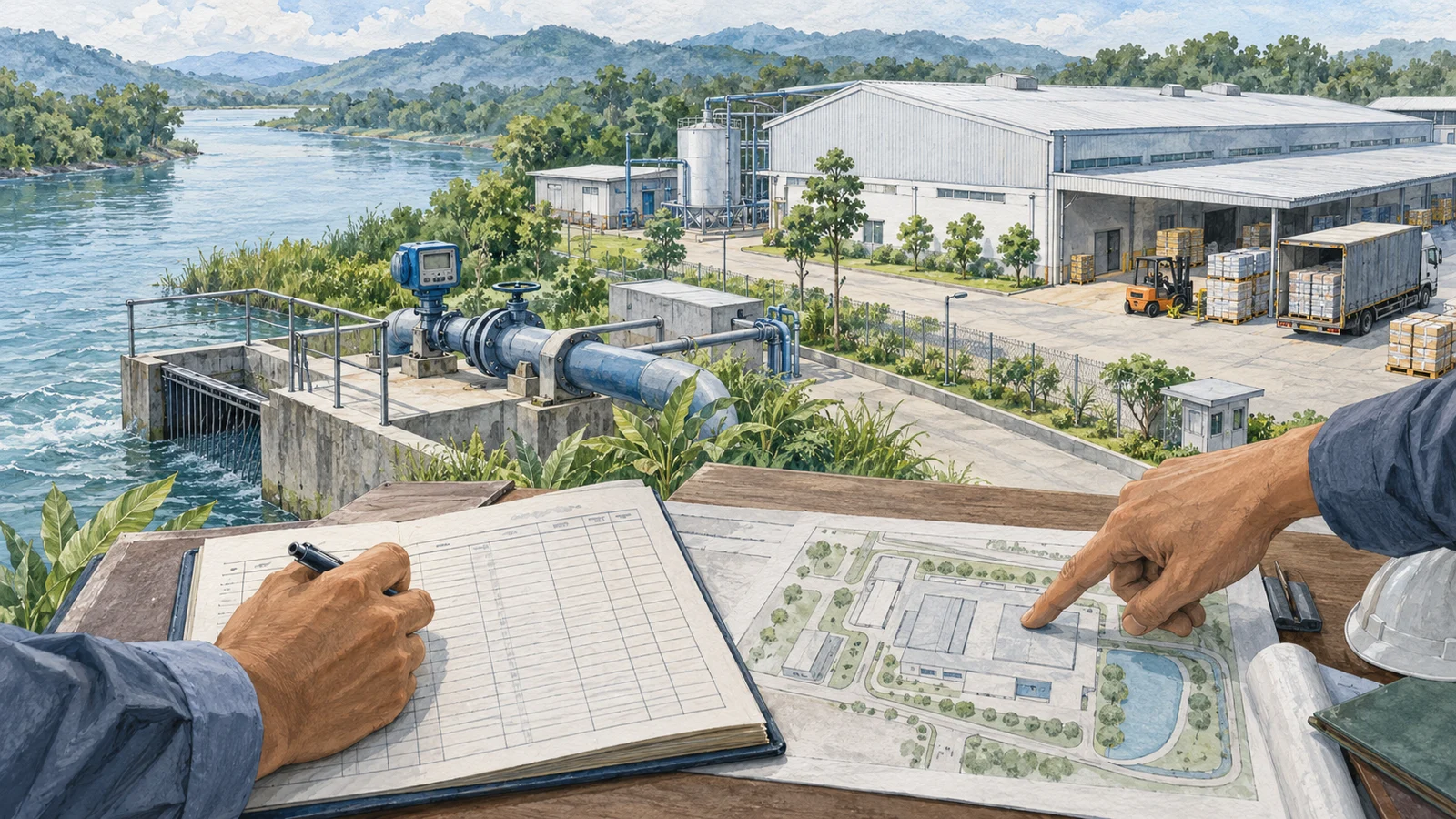
Suppose a packaging factory uses water for washing and cooling. Accounting holds invoices, engineering keeps meter readings, and procurement buys the materials. This is a fictional example for designing a workflow, not a finding about an actual factory's risk.
Choose this site as a pilot boundary. Ask which processes would be disrupted by reduced water supply and what alternatives exist. For this pilot, this article recommends starting with available site evidence and identifying gaps before deciding which additional data to buy or request from suppliers.
This article proposes five initial inventory entries, each connecting an owner with evidence and limitations.
Site and water-using processes
The factory manager and engineering team check the site identifier, location, and water-using processes against the site plan and actual water-use points. Distinguish the registered address from the operating location; they may differ.
Water quantity and source
Engineering or the utilities owner collects meter records, water bills, and provider information, including measurement periods. Purchased volume may differ from use or discharge. Keep each measure's units and boundaries distinct.
Spending that can be reconciled to accounting
Accounting and finance review purchase documents, general ledger, cost centres, and accounting periods to connect water spending to the correct site and period. Spending is a monetary amount, not a measure of ecosystem impact.
Materials and services needed by the process
Procurement and the supplier owner connect supplier identifiers, purchase records, contract terms, and verifiable production-origin information. A supplier's address does not establish material origin. Unanswered questions remain unknown.
Production consequences and alternatives during a shortage
The production manager and finance team review production plans, quality requirements, alternative water sources, and cost assumptions to consider process consequences. Scenario results must remain distinct from events that have happened.
Each entry should record its data date, preparer, reviewer, and evidence location. If the water source is unknown, do not infer a river from the factory's location. Assign someone to ask the provider and set a follow-up date. An explicit unknown with an assigned task is more useful than a completed field that cannot be verified.
Use ERP to connect documents, then check external information
Accounting can start with the site identifiers, cost centres, suppliers, purchase lines, and invoices actually held in the current system. Where those records exist and classifications are consistent, they can connect documents across departments. First check which fields are available, how data can be extracted, and who can change them.
Water sources, river-basin characteristics, ecosystem information, and stakeholder views may sit outside ERP. Their sources, assessment methods, dates, and limitations need separate review. Combining accounting totals in a report does not automatically validate a nature-impact assessment. This pilot inventory is not a completed assessment or disclosure report.
The draft mentions TNFD's LEAP approach as an option; it does not require every company to use LEAP. Teams choosing that approach should read the detail and select methods suited to their activities. Draft paragraphs 11-12, page 24
Before extending the review across the business
Have the factory manager check that the process map reflects actual operations. Accounting should reconcile amounts to original documents, while the ESG team considers whether the evidence supports evaluating risks and opportunities. Separate matters needing specialist expertise and assign owners, rather than asking accounting to judge ecosystem conditions from invoices.
The CFO can use findings from the pilot to decide whether to fund better data identifiers, additional evidence collection, or a particular assessment. Extend the review to other sites and suppliers according to business reasons and verifiable information, rather than the number of fields that can be filled.
For the next meeting, ask the team to select one site and answer: Which natural resources does it depend on, who holds the evidence, and what needs confirmation before assessing the business consequences? Those answers connect the ISSB consultation to work with accountable owners and checkable records.
Related reading: Collecting ESG information from suppliers and Preparing ESG data for Thai companies.
AI-generated illustration created for this article, not an actual factory or customer. Document status and sources checked on October 24, 2026.