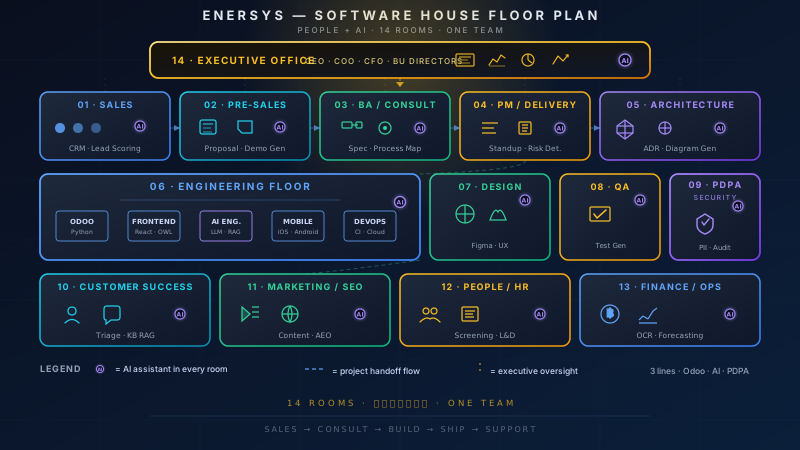
Enersys provides Odoo and manages the system environment itself on cloud infrastructure located in Thailand. The model is intended for businesses that want the team managing Odoo to understand both the work inside the system and the environment where it runs. When a problem needs investigation or a change needs planning, the discussion starts with people who know the system context.
Once Odoo becomes part of daily work across sales, inventory, finance and operations, the business needs to know more than where the system is located. It should also see who manages each part, who can access sensitive areas and whom to contact when something goes wrong. Those details are defined around the customer’s actual work and connected systems.
Start with Responsibility
Several parties usually support one business system. Users maintain day-to-day records, the customer’s IT team manages accounts and connections, and the provider manages the environment where Odoo runs. If those responsibilities are unclear, each party may wait for another when the system slows down, access fails or records appear wrong.
Before service begins, the business should have a contact list and a division of work that everyone can understand. It should state what Enersys manages, what the customer’s team manages, who approves changes and which events require an immediate notification. This is more useful than a broad promise of “complete support” because people can act on it during a real incident.
A Thailand Location Makes the Data Path Easier to Examine
Knowing that the main system runs on cloud infrastructure in Thailand gives an organisation a clearer starting point for mapping data. This matters when Odoo connects to a website, sales channel, payment system, MES or another service. Information may not remain in Odoo alone, and every connected service can have its own infrastructure.
Ask the same questions for each system: Where does the information begin? Where does it travel? Who can access it? How long is it retained? If backups or subprocessors are involved, ask separately where those services operate and which terms apply. The location of the main system should not be treated as proof that every copy remains in the same country.
For PDPA work, system location is one input to a wider assessment. It does not by itself show that a system complies with the law. The organisation still needs to consider its purpose and legal basis for using personal data, retention periods, data-subject rights and measures suited to the risks of the work. Under Thailand's Personal Data Protection Act B.E. 2562, controllers and processors have different duties, including appropriate security measures and processing under their agreement. Each party's role depends on the actual decisions and processing, not the provider label alone.