A customer reports a broken machine by email. The service team opens the customer relationship management system (CRM) for account history, then checks the enterprise resource planning system (ERP) for its serial number and shipment date before deciding whether the repair is covered by warranty. Someone suggests using AI to read the email. The team soon discovers that different departments use different warranty start dates, and some records have no serial number.
This hypothetical situation illustrates the work a Forward Deployed Engineer, or FDE, takes on. The engineer works closely with a customer's team, learns where the problem lies, builds and connects software, tests it against operational work, and stays involved until people can use it. That responsibility includes agreeing on definitions and decision rights. A successful response from a program is only one part of the job.
For Thai engineers considering a career change, FDE is a path to examine if you enjoy writing software and want to see its effect on customers' work. Business leaders should understand the role before hiring or buying services, because the same title can carry quite different responsibilities at different companies.
A role that predates the current AI wave
In an interview published on 2 November 2020, Palantir described Forward Deployed Software Engineers as engineers working directly with customers to adapt its platform to their problems. The interview covered building, testing, production support, and sharing lessons with product teams. This establishes that the role existed before today's generative AI wave; it does not establish who first used the title or when. Read Palantir's interview
The newer development is its application to AI. In an article dated 22 October 2026, Colin Jarvis, OpenAI's Head of Forward Deployed Engineering, said he founded its team in early 2025 to address the gap between apparent model capability and dependable use at work, feeding deployment problems back into products and research. Read OpenAI's explanation
These examples help explain why readers encounter the FDE title in AI discussions. They are not a survey of Thailand's labor market. This article therefore makes no claim about the rate of local job growth or average pay.
How does FDE differ from existing roles?
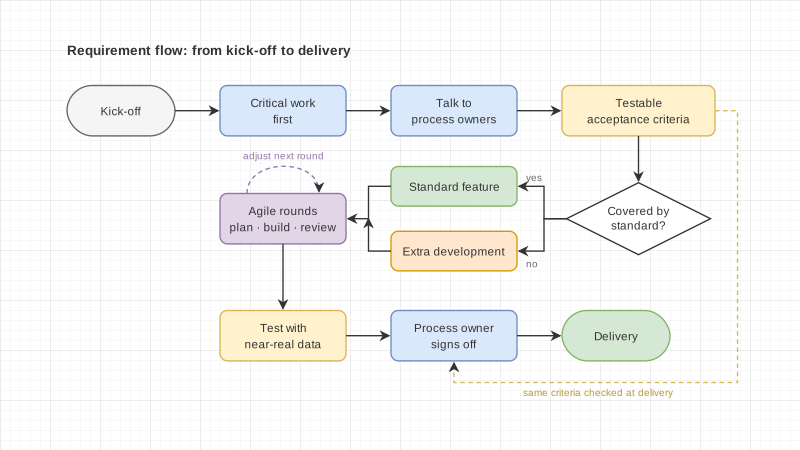
The defining feature is continuity of responsibility. An engineer may start with a poorly defined request, help establish who has the problem and what success means, decide what to build, and identify who will operate it after launch.
The following comparison is a framework for discussing scope, rather than a professional standard that every employer follows.
Scroll the table horizontally to read every column.
| Role | Typical center of responsibility | What to check in a job description |
|---|---|---|
| Software Engineer | Develop a product or system capability that meets its goals and can be maintained | How much contact is there with users and problem definition? Who owns adoption? |
| Implementation Consultant | Install and configure software, adapt processes, train users, and hand over the system | Is coding required? Does accountability end at handover or include operational results? |
| Solutions Architect | Design the overall system and its integration agreements, considering constraints and alternatives | Does the architect also build and operate the system, or hand the design to another team? |
| Forward Deployed Engineer | Work closely with a customer to define the problem, build, support adoption, and bring reusable learning back to the team | What technical decisions can the engineer make? What responsibility covers code, production, and continued use? |
One person can perform several of these roles. Some implementation consultants write code and stay through production adoption; some architects own delivery. FDE should not become a way to rank one profession above another. Examine the deliverables and the authority that comes with them.
Company definitions also matter. OpenAI's FDE page distinguishes its customer-facing engineers from professional services, describing collaboration with service partners on problems at the frontier of AI. It says an FDE is typically unnecessary when existing AI capabilities can already do the task. That is OpenAI's division of responsibilities, rather than a definition binding every employer. OpenAI's FDE FAQ
The work starts before the code
Return to the equipment distributor in the opening example. Every detail that follows is hypothetical. It is not an Enersys customer or case study. Suppose the service team wants to spend less time assembling information for warranty review, while people retain decisions about coverage and charges.
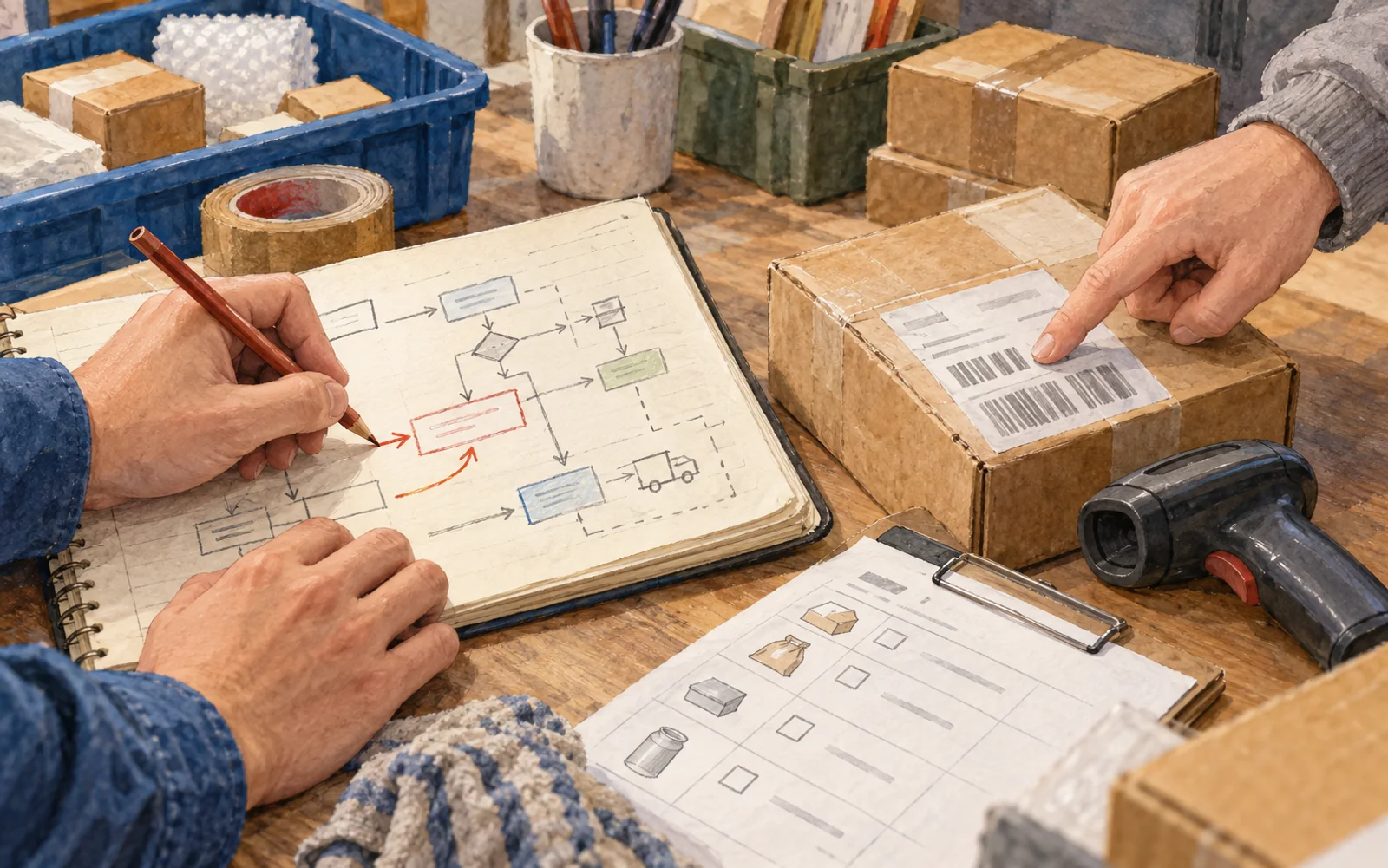
The engineer first observes an employee handling a request from incoming email to final reply. A useful question might be: why call the warehouse again when the ERP already has a shipment date? The answer may reveal that some products enter warranty on signed acceptance, rather than the invoice date. That rule immediately changes the integration and test plan.
The team then agrees on a small piece of work to try, such as preparing a draft service record with supporting references. The process owner must confirm which data is authoritative, who may access customer history, and which exceptions require a supervisor. Before the trial, the team should time the existing process and record its errors to establish a basis for comparison.
Scroll the table horizontally to read every column.
| Stage in this hypothetical project | What the engineer does | Evidence the team should receive |
|---|---|---|
| Understand the process | Follow one request and confirm the warranty start rule with the policy owner | A process map, source systems, and an owner for exception decisions |
| Build the necessary parts | Connect the CRM and ERP; use AI to extract serial numbers from email and prepare a service draft | Reviewable code, sample data, and permissions for each operation |
| Test failures | Try missing serial numbers, conflicting records, an unavailable downstream system, and duplicate requests | Test results, limitations, and conditions requiring human review |
| Trial with users | Have staff compare drafts with source documents in an agreed group of requests | Preparation time, drafts requiring correction, and reasons for non-use |
| Launch and hand over | Monitor problems, provide a way to stop and return to the old process, and train maintainers | Operating instructions, named responsibilities, and a change record |
AI may be useful for reading natural language in emails. Matching a serial number against a sales record should use inspectable data and rules. Where evidence is missing, the system should identify the gap and refer the request to a person. Fast software development does not replace the authority to confirm a warranty policy.
An engineer's day might therefore begin with a service employee explaining an incorrect draft, followed by checking logs, fixing a connector, adding a test, and demonstrating the change to the process owner. On another day, finding the right data or waiting for a decision could take most of the time. This is an illustration from the hypothetical project, not a universal FDE schedule.