Why AI Agents Are the Biggest AI Story of 2026
If 2024 was the year of "Large Language Models" and 2025 was the year of "RAG and AI Assistants," then 2026 is the year of AI Agents — AI systems that do more than answer questions; they can take action and get real work done.
Google Cloud has just released a 60+ page technical guide titled "Startup Technical Guide: AI Agents", summarizing everything involved in building AI Agents, from foundational concepts to production-grade deployment. This is not just a document for startups — it is something every organization serious about AI should study.
📥 Download the full guide: Google Cloud — Startup Technical Guide: AI Agents (PDF)
What Are AI Agents — and How Are They Different from Ordinary Chatbots?
An AI Agent is not just a language model that answers questions. It is a system composed of 5 core components working together:
1. Model — The Agent’s Brain
A large language model (such as Gemini) that performs the "thinking," analysis, and decision-making. The model is only one part of the system, not the whole thing.
2. Tools — The Hands and Feet That Do the Work
An agent can call external tools, from searching Google Search and retrieving data from databases to creating tickets in project management systems, sending emails, or updating a CRM.
3. Orchestration — The "Think → Act → Observe" Method (ReAct)
At the heart of an agent is the ReAct loop: Reason (analyze the situation) → Act (choose the right tool) → Observe (review the result and continue reasoning), repeating until a complete answer or outcome is achieved.
4. Data — The Information That Makes an Agent Truly Useful
It is not enough to rely on pre-training knowledge. Agents must be grounded in the organization’s real data through techniques such as RAG (Retrieval-Augmented Generation) or GraphRAG, which can understand complex relationships across data.
5. Runtime — The Environment Where the Agent Operates
The infrastructure layer where the agent runs, which must support scalability, security, and monitoring.
3 Key Protocols That Will Reshape the AI Industry
The guide emphasizes open standards that will allow AI Agents from different systems to work together — something previous generations of AI lacked:
MCP (Model Context Protocol)
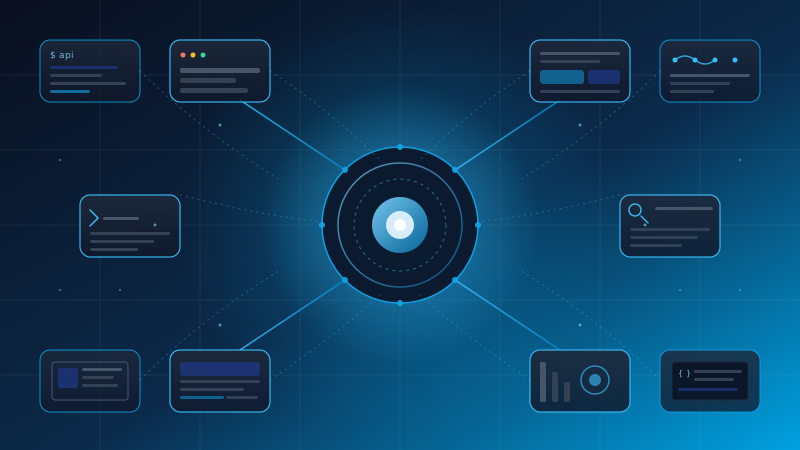
An open standard that allows AI models to connect to any data source in a plug-and-play manner. It is essentially like USB-C for AI, removing the need to build custom integrations every time.
A2A (Agent2Agent Protocol)
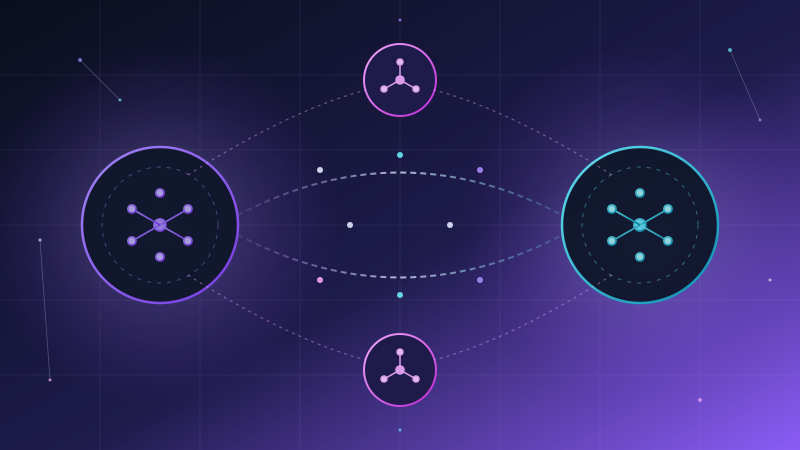
A protocol that enables agents from different teams or companies to "talk" to each other and hand off work automatically — effectively a standard API layer for the agent ecosystem.
ADK (Agent Development Kit)
An open-source toolkit for building agents, supporting both single-agent development and Multi-Agent Systems where multiple agents collaborate sequentially, in parallel, or in loops.
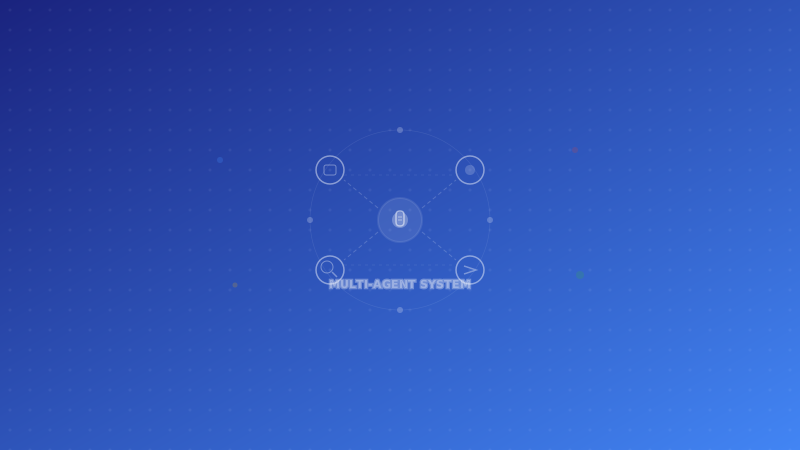
Multi-Agent Systems — When Multiple Agents Work Together
One of the most compelling concepts in the guide is the Multi-Agent System, where agents do not operate alone but function as a team:
- Sequential Agent — Agents work in sequence, passing results from one to the next, like an assembly line
- Parallel Agent — Multiple agents work at the same time, ideal for tasks that require gathering information from many sources
- Loop Agent — An agent repeats its process until the desired result is achieved, suitable for refinement tasks
Imagine this: one agent receives a customer request → another searches the product database → a third checks inventory → a final agent generates a quotation and emails the customer — all of it happens automatically.
Real-World Case Studies from Global Organizations
The guide is not just theoretical. It includes case studies that show how AI Agents are driving real business impact:
BioCorteX — Accelerating Drug Discovery from Years to Days
A life sciences company using a Multi-Agent System on Google Cloud to analyze a biological knowledge graph with 44 billion connections. Processes that once took years now take only days.
Box — Turning a Document Repository into an Answer Engine
A content management platform built an agent connected to Box Intelligent Content Cloud, allowing employees to ask questions in natural language and get immediate answers from internal company documents.
Zoom — An Agent That Schedules Meetings Automatically
Zoom AI Companion uses the A2A Protocol to connect with Google Agentspace, enabling an agent to read context from Gmail, schedule Zoom meetings, update Google Calendar, and notify participants automatically.
AgentOps — Ensuring Agents Operate Correctly and Safely
This is one of the most important sections — and one that many people overlook. The guide stresses that a strong AI Agent strategy requires AgentOps (Agent Operations), an operating framework spanning 4 layers:
Layer 1: Component-Level Testing
Test each part of the agent thoroughly — do the tools work correctly? Is data being parsed properly?
Layer 2: Trajectory Evaluation
Assess the agent’s reasoning process — does the Reason-Act-Observe sequence make sense? Is it choosing the right tools?
Layer 3: Outcome Evaluation
Evaluate the final result — is the answer factually correct? Does it solve the user’s problem? Is the information complete?
Layer 4: System-Level Monitoring
Track real production performance — latency, error rate, token usage, and cost per transaction.
Harrison Chase, CEO of LangChain, said: "Agents hold the key to a new level of productivity, but their success depends on our guidance."
Responsible AI — Why Safety Must Come Before Scale
The guide warns that AI Agents with the power to "take action" come with greater risks than typical chatbots:
- Bias and Fairness — Agents may make unintentionally unfair decisions
- Hallucination — Agents may act on inaccurate information, which is more dangerous than simply giving a wrong answer
- Security — Agents with access to external systems may be vulnerable to prompt injection attacks
- Privacy — Agents retrieving data from multiple sources may expose information that should remain confidential
Google recommends a "Defense in Depth" approach — from infrastructure-level access control and application-level input/output guardrails to an audit trail for every action an agent takes.
Implications for Thai Businesses — Why This Matters Now
1. AI Agents Will Change How Every Department Works
This is no longer just an IT issue. Sales, finance, HR, and legal will all have "AI employees" capable of handling repetitive work. Organizations that move early will gain a competitive advantage that will be difficult to catch up with.
2. Multi-Agent Systems Are the "Next Level" of Automation
If RPA is rule-based automation, then Multi-Agent Systems are intelligent automation — systems that can reason, adapt to changing situations, and work across platforms without requiring new integrations every time.
3. MCP and A2A Will Create an Open "AI Ecosystem"
Organizations will no longer need to lock themselves into a single vendor. Agents from different systems will be able to communicate through open standards. Work that once required months of integration effort could be reduced to just days.
4. AgentOps Is the "DevOps of the AI Era"
An organization without AgentOps is like a software company without DevOps — deploying agents without knowing whether they are working properly, hallucinating, or driving costs out of control.
5. Security and Compliance Must Be Designed In from Day One
This is especially important for Thai businesses operating under PDPA. Agents that access customer data must have strong guardrails, audit trails, and access controls.
What Thai Organizations Should Do Now
- Study this guide seriously — download the Google Cloud AI Agents Guide (PDF) and have both technical and business teams read it together
- Start with a clear use case — do not build an agent just because AI is trending; start with a real business problem that consumes team bandwidth
- Put AgentOps in place from the beginning — do not wait until you have 10 agents before thinking about monitoring
- Think about safety before scale — especially around data privacy under PDPA
- Consult experts — building production-ready Agentic AI requires practical experience, not just reading a guide
Resources