The Problem Every Enterprise Is Starting to Face
Imagine you need an AI Agent to automate invoice processing. You search on Google and find more than 200 agents claiming they can do it. Some come from major cloud providers, some from newly funded startups, and some are open-source projects built by contributors around the world.
How do you know which one is right for your business?
This is the challenge enterprises worldwide are facing in 2026—not a shortage of AI Agents, but a shortage of a reliable way to discover and evaluate agents that match business needs, are secure, and integrate with existing systems.
What Is Agent Discovery?
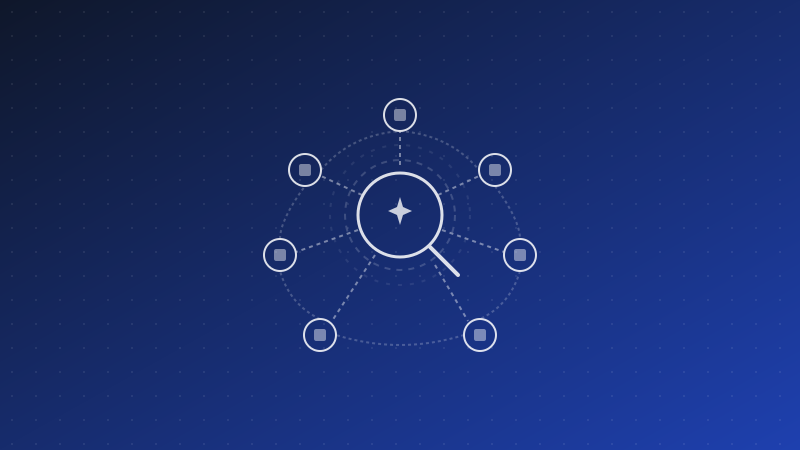
Agent Discovery is the process by which one system can automatically find, identify, and evaluate the capabilities of other AI Agents—similar to how a web browser locates websites through DNS, but for the world of AI Agents.
A simple comparison:
- Before Google existed — You had to remember the URL of every website you wanted to visit
- After Google — You simply type what you need, and the system finds it for you
Agent Discovery is doing the same thing for the AI Agent ecosystem—shifting from a world where you must know every agent yourself to one where you state your requirement and let the system match the most suitable agent automatically.
Why Is Agent Discovery Important for Enterprises?
1. The Number of Agents Is Exploding — Choice Becomes the Problem
By 2026, thousands of AI Agents are distributed across platforms ranging from AWS Bedrock, Azure AI Foundry, and Google Cloud to independent platforms. Understanding what each agent can do, which languages it supports, what data it requires, and how secure it is can no longer be handled manually.
2. Shadow AI — A Silent, Invisible Risk
Gartner reports that 69% of organizations have discovered or suspect that employees are using AI without IT approval. Okta refers to this as "Shadow AI"—agents being used without visibility into what data they can access, what permissions they hold, or where information is being sent.
By 2030, more than 40% of organizations are expected to face security incidents directly related to Shadow AI.
3. Multi-Agent Systems Require Interoperability
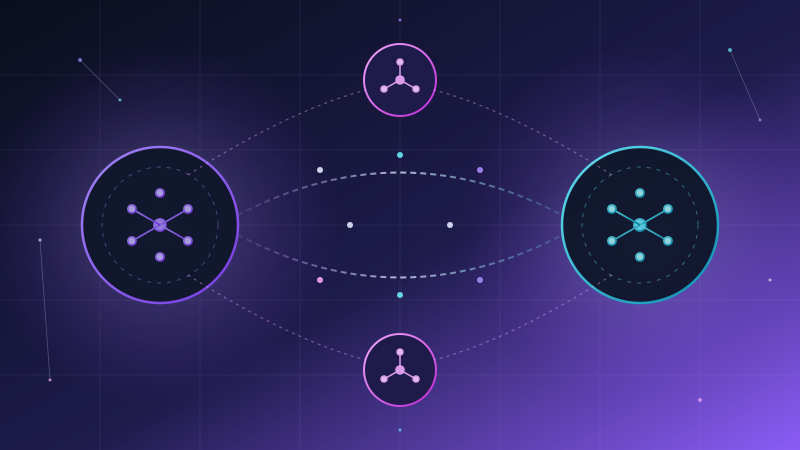
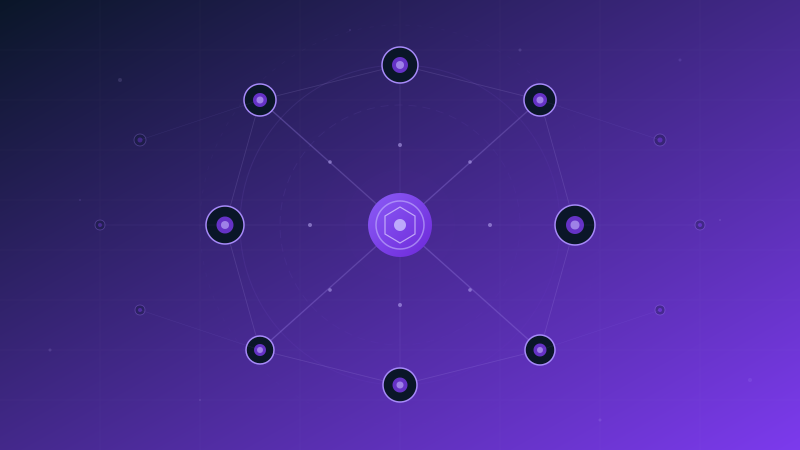
Enterprises that use AI seriously do not rely on just one agent—they use multiple agents working together. One agent may retrieve data from a CRM, another may analyze it, and another may generate a report. If these agents cannot "discover" and "understand" each other’s capabilities, multi-agent systems cannot function effectively.
Key Protocols Defining the Standard
Agent2Agent (A2A) — Google’s Standard
A2A is an open protocol backed by more than 100 organizations, including Salesforce, SAP, ServiceNow, and Atlassian. The core concept is that every agent exposes an AgentCard—a JSON document located at /.well-known/agent-card.json that describes who the agent is, what it can do, and what skills it provides.
When one agent needs help, it reads the AgentCards of other agents, evaluates which one is most suitable, and delegates the task—all automatically.
MCP (Model Context Protocol) — Anthropic’s Standard
MCP connects AI systems to external tools such as databases, APIs, and file systems. If A2A is how agents communicate with other agents, MCP is how agents access the "tools" they need to get work done.
IETF Draft — An Internet-Scale Standard
The IETF is drafting a standard for HTTP-based AI Agent Discovery that defines agent metadata formats covering capabilities, input/output schemas, supported languages, authentication methods, and even quality scores—along with semantic search that can discover agents using natural-language descriptions.
What Thai Enterprises Should Prepare For
Put Agent Governance in Place Now
Do not wait until your organization has 50 agents before trying to bring order to the environment. Start defining policy now:
- Which agents are approved for use?
- What data can each one access?
- Who is the designated "owner" responsible for each agent?
- Is there an audit process for agent usage?
Choose Platforms That Support Discovery
When selecting an AI platform, check whether it supports open standard protocols such as A2A and MCP. Platforms built on open standards help you:
- Switch agents without vendor lock-in
- Integrate agents from multiple vendors more easily
- Support future multi-agent systems
Prepare Your Team
IT teams need to understand that Agent Discovery is not just a technical issue—it is also about risk management and cost control. When agents can discover and invoke other agents on their own, costs can rise rapidly without anyone noticing.
Looking Ahead
Agent Discovery is evolving from a "nice-to-have feature" into foundational infrastructure for enterprises using AI.
It is similar to the early days of the internet—there was a time when millions of websites existed, but without a strong search engine, people had to remember URLs themselves. The moment Google emerged, everything changed.
Agent Discovery is the "Google" of the AI Agent world—and enterprises that understand it early and prepare for it now will be the first to unlock the full potential of the agent economy.
Sources