PDPA & Privacy

PDPA Enforcement Is Intensifying: 2,672 Complaints — Key Lessons for Thai Organizations

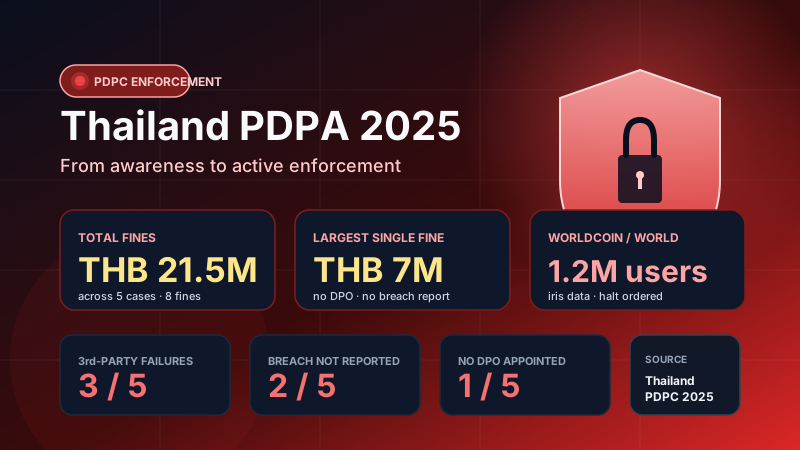
Thailand’s PDPC reported 2,672 PDPA complaints as of January 2026, ordered Worldcoin to delete the biometric data of 1.2 million people, and imposed more than THB 21.5 million in fines — here are the key lessons and practical steps Thai organizations need to know.

23 Mar 202612 min
PDPAPrivacyComplianceThailandData ProtectionDPO

The Numbers You Need to Know: PDPA Is No Longer Just a Law on Paper

As of January 2026, Thailand’s Personal Data Protection Committee (PDPC) reported a total of 2,672 complaints. This figure reflects two important trends: Thai citizens are becoming more aware of their rights, and the PDPC is taking enforcement seriously.

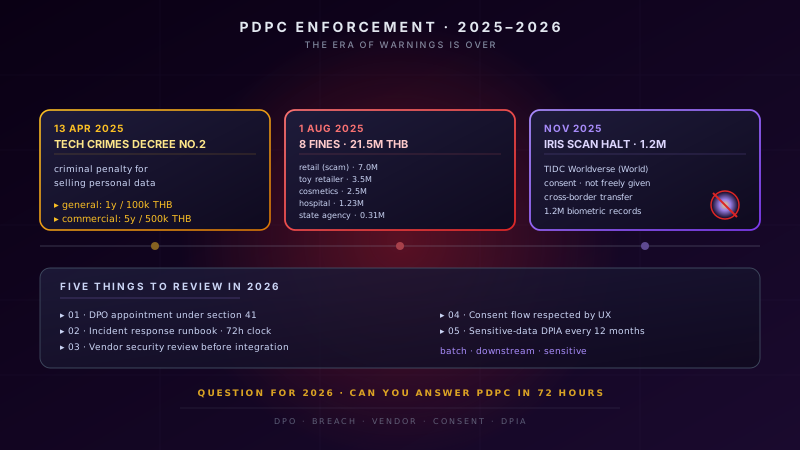
On the penalties side, the PDPC has already issued 8 administrative fine orders across 5 cases, with total fines exceeding THB 21.5 million. In August 2025 alone, fines reached THB 14.5 million, pushing the cumulative total past THB 21 million.

These numbers send a clear message: the era of “warnings first” is over. PDPA enforcement in Thailand is now in full swing.


The Worldcoin Case — The Most Expensive Lesson So Far

One of the most significant cases in Thailand’s data protection landscape involved the PDPC’s order against Worldcoin (now operating as World), which offered iris scanning services in exchange for digital currency.

The PDPC ordered Worldcoin to stop providing iris scanning services in Thailand and to delete the biometric data of more than 1.2 million Thai users. According to the PDPC, collecting biometric data in exchange for cryptocurrency violated the PDPA because:

  • Biometric data is sensitive personal data and requires explicit consent
  • Exchanging data for financial benefits undermines the freedom of consent, since individuals are being incentivized by compensation
  • Adequate safeguards were not in place for data of such a highly sensitive nature

This case makes one thing very clear: the PDPC is prepared to act against global technology companies, not just small local organizations. It also confirms that biometric data is a red line organizations should not cross lightly.


8 Fine Orders Across 5 Cases — The Most Common Types of Violations

Based on the 8 fine orders issued so far, several recurring patterns of non-compliance are emerging:

1. Customer Data Leaked to Call Center Scam Networks

The single highest fine so far was THB 7 million, imposed in a case where customer data was leaked and later used by call center scam gangs to defraud victims. This shows that the PDPC places significant weight on the real-world harm suffered by data subjects. When leaked data is used to facilitate criminal activity, the penalties rise accordingly.

2. Government Agency and Software Developer Fined Together

Another notable case involved a cyberattack that exposed the personal data of more than 200,000 individuals. Both the government agency (as the data controller) and the software developer (as the data processor) were fined more than THB 150,000 each.

The key takeaway is simple: data controllers and data processors share responsibility. Outsourcing work does not mean outsourcing accountability.

3. Common Violation Patterns to Watch For

Across all 5 cases, the most common compliance failures include:

  • Insufficient security measures — such as lack of encryption or poor access controls
  • Failure to report a breach within 72 hours — the PDPA requires notification to the PDPC without undue delay
  • No Data Protection Officer (DPO) or no clearly assigned owner of privacy responsibilities
  • Excessive data collection — collecting personal data beyond what is necessary for the stated purpose

Sectors Under Closer Scrutiny

In 2026, the PDPC has signaled that it will step up enforcement across several high-risk sectors:

E-Commerce

E-commerce platforms handle large volumes of customer data, including names, addresses, phone numbers, payment details, and shopping behavior. The more AI is used to analyze customer behavior, the more important it becomes to manage consent properly and stay within the permitted scope of data use.
Healthcare

Health data is classified as sensitive personal data under the PDPA. Many hospitals and clinics still rely on legacy IT systems that were not designed to meet modern privacy and data protection standards, making them vulnerable both to cyberattacks and regulatory scrutiny.

Telecommunications

Telecom providers hold personal data at a national scale, including location data, call records, and internet usage information. A data breach in this sector can have far-reaching consequences.

Public Services

Recent cases make it clear that government agencies are not exempt from the PDPA. Many public-sector databases still require significant security upgrades, especially where data is shared across agencies.


What Organizations Should Do Now

Based on the lessons from the 5 fined cases and the broader enforcement trend, here are the practical steps Thai organizations should take immediately:

1. Review Your Data Inventory Seriously

Know what data your organization holds, where it is stored, who can access it, and how long it is retained. If an organization does not know what data it has, it cannot protect it effectively.

2. Appoint a DPO or a Responsible Team

Whether you formally appoint a Data Protection Officer or assign a dedicated privacy team, the important thing is to have a clearly accountable owner. Privacy should not be treated as an ad hoc side task for IT or legal.

3. Prepare a Data Breach Response Plan

If a breach occurs, the organization must be ready to notify the PDPC within 72 hours. There should be a clear process that defines who does what, who needs to be informed, and how affected individuals will be notified. Failure to report a breach on time is one of the factors that can lead to higher fines.

4. Review Contracts with Vendors and Data Processors

Given that both data controllers and data processors have already been fined in the same case, organizations need to ensure that contracts with external service providers include clear data protection obligations, including audit rights.

5. Conduct Privacy Impact Assessments (PIAs)

Before launching any new project involving personal data — especially sensitive data such as biometric or health information — organizations should always assess privacy risks first. The Worldcoin case is a clear example of how skipping this step can lead to serious consequences.

6. Train Employees Continuously

Most data breaches are caused by people, not systems. PDPA awareness training should be conducted regularly for employees at all levels, not just once during onboarding.


Key Takeaways

The numbers speak for themselves: 2,672 complaints, more than THB 21.5 million in fines, and an order to delete the biometric data of 1.2 million people. Together, they confirm that the PDPA is no longer just a symbolic law.

In 2026, the PDPC has made it clear that enforcement will intensify, particularly in e-commerce, healthcare, telecommunications, and the public sector. Organizations that are still unprepared are not only at risk of fines — they also risk losing the trust of customers they worked hard to earn.

You do not need to wait until everything is perfect to begin. Start by identifying what data your organization holds, where it is stored, and what protections are already in place. From there, improve step by step.

Need advice on PDPA compliance? Contact the Enersys team to assess your organization’s readiness for personal data protection compliance.


References

"Empowering Innovation,
Transforming Futures."

ติดต่อเราเพื่อทำให้โปรเจกต์ของคุณเป็นจริง